

Basic routine for Combination Skin with Renewing Serum

OCTOBER OFFER: FREE GENTLE EXFOLIATING ESSENCE WHEN YOU SHOP FOR 48€
- Fine lines, pigmentation, dullness, dry acne and mature skin.
- A routine is a consistent way of caring for your skin, every day.
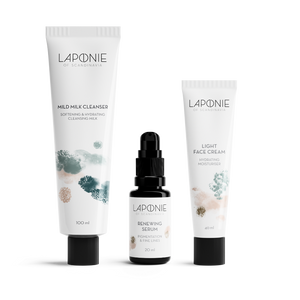
- Includes: Mild Milk Cleanser, Renewing Serum and Light Face Cream.
- No added fragrance, essential oils, floral waters, alcohol or sulphates.
- Developed for sensitive and problem skin in our own laboratory in Espoo, Finland.
- Allergy-labelled.
- Choose a free sample with all orders.
- Delivery: Finland 1-4 business days & rest of EU 2-7 business days.
- Free shipping: Finland orders of 38€ & rest of EU 58€.
-
30 day sensitivity guarantee
30 day sensitivity guarantee
If a product causes an unwanted reaction on your skin, such as irritation, we'll compensate you.
HOW THE SENSITIVITY GUARANTEE WORKS:
1) Order your product or products pof choice.
2) If a product causes an unwanted reaction, send us an email within 30 days of receiving your order to customercare@laponieskincare.com and describe your reaction.
3) We'll compensate the product or products in question.
Please note: simply not liking a product or feeling that e.g. a moisturiser is too light is not grounds for the guarantee. The guarantee is valid only for purchases made in the Laponie webshop.
WHEN YOU TRY NEW PRODUCTS ON SENSITIVE AND PROBLEM SKIN:
- Always start with one product at a time, not all at once.
- Start by using your product once a day.
- For very sensitive and reactive skin, we recommend patch-testing.
DON'T KNOW WHAT TO TRY?
Email us at customercare@laponieskincare.com for a free, personal consultation.
Mild Milk Cleanser
Aqua, Canola Oil, Glycerin, Polyglyceryl-3 Dicitrates/Stearate, Sodium Levulinate, Cetyl Alcohol, Sodium Anisate, Xylitol, Xanthan Gum, Citric Acid
Renewing Serum
Aqua, Argania Spinosa Kernel Oil, Glycerin, Glycine Soja Seed Extract, Bakuchiol, Bisabolol, Helianthus Annuus Seed Oil, Tocopherol, Xanthan Gum, Acacia Senegal Gum, Sodium Levulinate, Potassium Sorbate, Citric Acid, Phytic Acid
Light Face Cream
Aqua, Canola Oil, Polyglyseryl-6 Distearate, Avena Sativa Kernel Oil, Glycerin, Papaver Somniferum Seed Oil, Avena Sativa Kernel Flour, Sodium Dehydroacetate, Sodium PCA, Xanthan Gum, Sclerotium Gum, Lecithin, Pullulan, Sodium Levulinate, Silica, Honokiol, Magnolol
What each ingredient does
Acacia Senegal Gum: Film forming
Also known as gum arabic, acacia gum is a natural gum consisting of the hardened sap of two species of the acacia tree. In cosmetics, acacia gum is used for it's ability to create less stringy, or slimy and sticky, gels. The acacia gum we use is ethically and sustainably handpicked in Africa, and is a 100% renewable raw material.
Aqua: Solvent
Water. The main vehicle for our water based products
Argania Spinosa Kernel Oil: Emollient and skin conditioning
Argan oil. A staple for us. It is obtained from the non-roasted organic kernels of Moroccan Argania Spinosa, i.e. argan nuts. We love it in almost everything, and especially like its repairing qualities. It is slightly higher in oleic acid, but is usually suitable for clog prone skin, as it contains a fair amount of lupeol, a triterpenoid with anti-inflammatory benefits.
Avena Sativa Kernel Flour: Skin protecting
Colloidal oatmeal. The whole oat grain, including the bran layer, is milled and sieved. This results in a light cream coloured, fine powder. The bran layer of the oat contains a high proportion of natural actives, including oat beta-glucan, avenanthramides, oil and protein, all of which are beneficial for cosmetic use on the skin. A 'colloid' or colloidal suspension is defined as a substance with dispersed insoluble particles suspended throughout. Colloidal oatmeal soothes and relieves redness, itching and minor skin irritations caused by eczema or skin rashes and is monographed by the FDA as a skin protectant. It reduces TEWL (transepidermal waterloss) and effectively forms a physical barrier on the skin surface. The oatmeal we use is made from Finnish oats.
Avena Sativa Kernel Oil: Skin conditioning
Oat kernel oil. This dark golden oil has a nearly 50/50 balance of oleic and linoleic acids. From a skincare point of view, it's an excellent skin softener and has some calming properties too. We source our oat oil from Fazer, a Finnish family-owned, 126-year-old food and food service company, who produce their oil in Finland, using Finnish oats. The Finnish-ness matters because a) the soil in Finland produces outstanding quality oats and b) it is quite rare for an oil producer to have a 100% local supply chain.
Bakuchiol: Antimicrobial, antioxidant and skinconditioning
Bakuchiol, derived from the psoralea corylifolia seed, is a true sensitive and problem skin multitasker. It works wonders on pigmentation but is also takes care of fine lines, congested skin and breakouts. Bakuchiol is often compared to retinol in terms of efficacy, and research shows it to be as efficient as retinol in treating e.g. acne, but without irritation. We use is sustainably harvested bakuchiol.
Bisabolol: Soothing, anti-inflammatory and anti-microbial agent
Bisabolol. A colorless viscous oil that is the main constituent of German chamomile essential oil. The bisabolol we use is organic, and produced not from chamomille but from the South American Candeia tree, and contains no farnesol, a potential fragrance allergen.
Canola Oil: Emollient and skin conditioning
Sustainably produced, deodorized and purified Swedish canola oil (from rapeseed oil) gently dissolves makeup and dirt. Canola oil is commonly used in cosmetics and is well-tolerated, skin wise. It is slightly higher in oleic acid (at around 60%), with linoleic and alpha-linolenic acids at a total of just over 30%, making it a good all-around oil for most, and especially for drier and eczema prone skins.
Cetyl Alcohol: Thickening and emulsion stabilising
A fatty alcohol made from RSPO certified palm oil. Please note that like sugar alcohols, e.g. glycerin or xylitol, fatty alcohols are not the same as denatured alcohol (ethanol); both sugar alcohols and fatty alcohols have moisturising and conditioning properties, whereas denatured alcohol has a completely different function in skincare products (and can be drying on skin).
Citric Acid: Buffering agent
Citric acid is a commonly used buffering, i.e. pH adjusting, agent in cosmetics. It is made through bacterial fermentation and shifts the pH of the product into the acidic range. This is closer to the natural pH of the skin, which may range from 4 to 7, but is usually thought to be between 5 and 6, with recent studies, however, indicating it to be below 5.
Glycerin: Humectant and skin protecting
Technically a sugar alcohol, glycerin is one of the oldest, most common and most versatile humectants used in cosmetics. It moisturises and protects the skin, accelerates skin barrier recovery and has antimicrobial properties, among other things. We use vegetable, rapeseed-derived glycerin.
Glycine Soja Seed Extract: Emulsifier and skin conditioning
An emulsifier, put simply, enables the mixing of water and oil into an emulsion. This particular one is extremely mild, non-allergenic, and non-irritating, suitable for delicate and sensitive skin. It's a natural, plant-based and highly stable lysophospholipid extracted from a non-GMO soybean source, which is also able to reduce transepidermal water loss (TEWL), maintaining moisture in the skin and strengthening the integrity of the skin barrier. Bonus: it also enhances collagen and elastin production.
Helianthus Annuus Seed Oil: Sunflower seed oil
Emollient. Sunflower oil is widely used in skincare, and has a high concentration of natural vitamin E, and is especially well suited for dry and dehydrated skin, due to a high linoleic acid content (at around 60%), which aids in strengthening the skin barrier.
Honokiol: Antioxidant and skin conditioning
Magnolia bark contains two potent anti-inflammatory substances, magnolol and honokiol, which synergistically inhibit the activation of NF-KB, a key inflammatory mediator. These two compunds can protect skin against chronic inflammation, and reduce skin redness. Honokiol boosts the effect of our Cream’s preservative system.
Lecithin: Skin conditioning, emollient and emulsifying
Lecitihin is a widely used natural emulsifier in skincare, to enable the mixing of water and oil into an emulsion. Lecitihin leaves a light powdery feel to skin when used in e.g. creams. This one is soy-derived.
Magnolol: Antioxidant
Magnolia bark contains two potent anti-inflammatory substances, magnolol and honokiol, which synergistically inhibit the activation of NF-KB, a key inflammatory mediator. These two compounds can protect skin against chronic inflammation, and reduce skin redness. Like honokiol, magnolol boosts the effect of our Cream’s preservative system.
Papaver Somniferum Seed Oil: Emollient
Poppy seed oil. A sustainably sourced virgin oil containing sterols and Vitamin E, and with a high linoleic acid content. It is a 100% UK product, fully traceable and with a sustainable supply chain: the oil is a pharmaceutical byproduct. Our chemist Jaana has actually met the guy living next to the field of poppies from which the oil is harvested by a 5th generation family farm. Poppy seed oil has excellent skin barrier recovery properties, and is especially suitable for sensitive skin. The oil is obtained by lightly pressing the seeds of the White Poppy.
Phytic Acid: Chelating
A chelating agent improves product stability. This one is a natural alternative to the widely used EDTA.
Polyglyceryl-3 Dicitrates/Stearate: Emulsifying and surfactant
An emulsifier, put simply, enables the mixing of water and oil into an emulsion. This particular one is gentle on the skin, non-ionic, based on glycerin, stearic acid and citric acid, and is made from rapeseed and RSPO certified palm oils.
Polyglyseryl-6 Distearate: Emulsifying
An emulsifier, put simply, enables the mixing of water and oil into an emulsion. This one is gentle on the skin and skin barrier, as it is of the non-ionic variety. It is derived from RSPO certified palm oil.
Potassium Sorbate: Preservative
Potassium sorbate is widely used in a variety of foods and personal care products. It works by inhibiting the growth of molds, yeasts and bacteria to preserve the freshness and quality of foods, beverages, or cosmetic products. Potassium sorbate is the potassium salt of sorbic acid, which is naturally occurring in some berries, although virtually all of the world's production of sorbic acid, as well as potassium sorbate, is manufactured synthetically.
Pullulan: Film forming
A natural and commonly used filmformer in cosmetics, pullulan is a polysaccharide, and produced by fermenting corn, potato and tapioca starch syrup with the yeast Aureobasidium Pullulans.
Sclerotium Gum: Thickening, skin conditioning and emulsion stabilising
A natural and commonly used thickener in cosmetics, sclerotium gum too is a polysaccharide produced from sugars through fermentation. This one gets its name from the Sclerotium rolfsii bacteria species. Origin: glucose syrup from wheat/corn.
Silica: Thickening
Silica is a mineral found abundantly in sandstone, clay, and granite, as well as in parts of plants and animals. It’s often used as an absorbent powder, i.e. a mattifying agent, in cosmetics. It is derived from sodium silicate which is acidified, then filtered, washed and dried.
Sodium Anisate: Antimicrobial, flavouring agent and preservative
The salt form of star anis derived organic acid.
Sodium Dehydroacetate: Preservative
Sodium dehydroacetate is the sodium salt of dehydroacetic acid. It is chemically synthesized through a multi-step reaction, starting with acetylene. Although it is not plant derived, it is approved by natural certification institutes such as COSMOS and the Soil Association, thanks to its mildness on the skin and body as well as the absence of any alternative registered (approved) natural preservatives under the EU’s cosmetic regulation.
Sodium Levulinate: Skin conditioning and preservative
Sodium levulinate is the sodium salt of levulinic acid, which is an organic acid derived from in this case sugarcane.
Sodium PCA: Humectant and skin conditioning
Sodium PCA is a widely used humectant in skincare. Chemically speaking an amino acid derivative, it is the sodium salt of pyroglutamic acid, which in turn is naturally present in human skin, and a part of the so-called NMF (natural moisturizing factor) of the skin. It has excellent moisture-binding capacity. The one we use made by the cyclization of beetroot derived L-glutamic acid. The sodium hydroxide used in the process is synthetic.
Tocopherol: Antioxidant
Vitamin E. A common antioxidant for fats and oils used in skincare. We use the vegetable kind, derived from soybean and rapeseed to prevent rancidity.
Xanthan Gum: Thickening, gel forming and emulsion stabilising
A natural and commonly used mainly thickener and gelling agent in cosmetics, xanthan gum is a polysaccharide produced through Bacterial fermentation of pure culture Xanthomonas Campestris with protein and carbohydrate sources, in this case from soy or corn.
Xylitol: Humectant and skin conditioning
Xylitol is a sugar alcohol and moisturises and conditions skin, whilst possessing anti-bacterial properties. There is some interesting research that suggests xylitol has the ability to inhibit bacterial biofilm on skin, which in turn may be the cause of many skin issues. The one we use is made in Finland from Finnish oats, and has probiotic properties.
If a product causes an unwanted reaction on your skin, such as irritation, we'll compensate you. That's our promise.
Order the product or products of your choice, including pre-made routines and sets.
If a product causes an unwanted reaction, send us an email within 30 days of receiving your order to customercare@laponieskincare.com and describe your reaction.
We'll compensate the product or products in question. Please note: simply not liking a product or feeling that for example a moisturiser is too light is not grounds for the guarantee.
-

FOR SENSITIVE & PROBLEM SKIN FROM OUR OWN LAB
-
 ALLERGY-LABELLED
 -
NO ADDED FRAGRANCE
-
 Made in Finland
 -
 30 DAY SENSITIVITY GUARANTEE
 -
MINIMALISTIC, NATURAL & VEGAN INGREDIENTS


Basic routine for Combination Skin with Renewing Serum
How to use this bundle

-
1. Cleanse
Massage a generous coin-sized amount of Mild Milk Cleanser onto dry skin with dry fingers without using water, then rinse and pat skin dry. For a deeper cleanse, e.g. for makeup, wipe off with a damp wash cloth or apply the Milk with cotton pads and wipe off face, then rinse. Can be used around the eyes.
-
2. Hydrate & treat
Apply 2-3 pumps of Renewing Serum to clean, dry skin. Can be used around the eyes.
-
3. Nourish & protect
With sweeping motions (don't rub - this may make the product pill), apply a pea-sized amount of Light Face Cream to face while still moist from Mist/Serum. Can be used around the eyes.
-
Formulated for sensitive & problem skin in our own lab
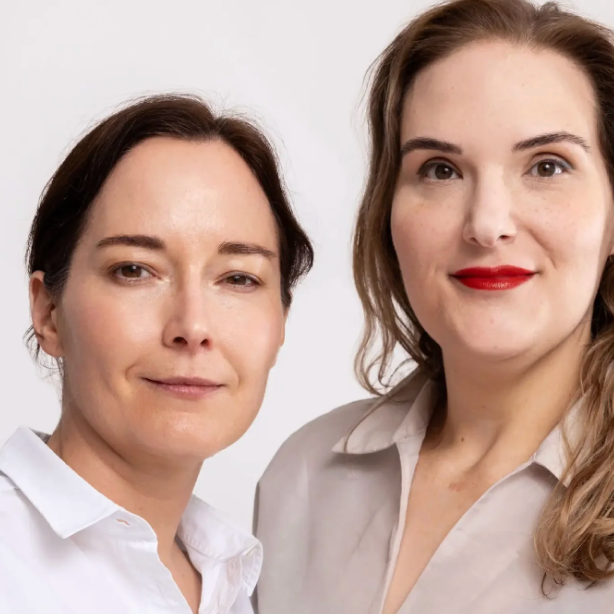
Our owners, CEO Kristina and cosmetic chemist Jaana, formulate all our products in our Helsinki lab, and test them on themselves - both have a long history of sensitive and problem skin.
-
No added fragrance
No added fragrance or essential oils, floral waters, alcohol and sulphates (including SLS).
-
Allergy-labelled
All our products carry the Finnish Allergy, Skin and Asthma Federation's independent Allergy-label.
See all ingredients (INCI) Hide ingredients
Mild Milk Cleanser
Aqua, Canola Oil, Glycerin, Polyglyceryl-3 Dicitrates/Stearate, Sodium Levulinate, Cetyl Alcohol, Sodium Anisate, Xylitol, Xanthan Gum, Citric Acid
Renewing Serum
Aqua, Argania Spinosa Kernel Oil, Glycerin, Glycine Soja Seed Extract, Bakuchiol, Bisabolol, Helianthus Annuus Seed Oil, Tocopherol, Xanthan Gum, Acacia Senegal Gum, Sodium Levulinate, Potassium Sorbate, Citric Acid, Phytic Acid
Light Face Cream
Aqua, Canola Oil, Polyglyseryl-6 Distearate, Avena Sativa Kernel Oil, Glycerin, Papaver Somniferum Seed Oil, Avena Sativa Kernel Flour, Sodium Dehydroacetate, Sodium PCA, Xanthan Gum, Sclerotium Gum, Lecithin, Pullulan, Sodium Levulinate, Silica, Honokiol, Magnolol